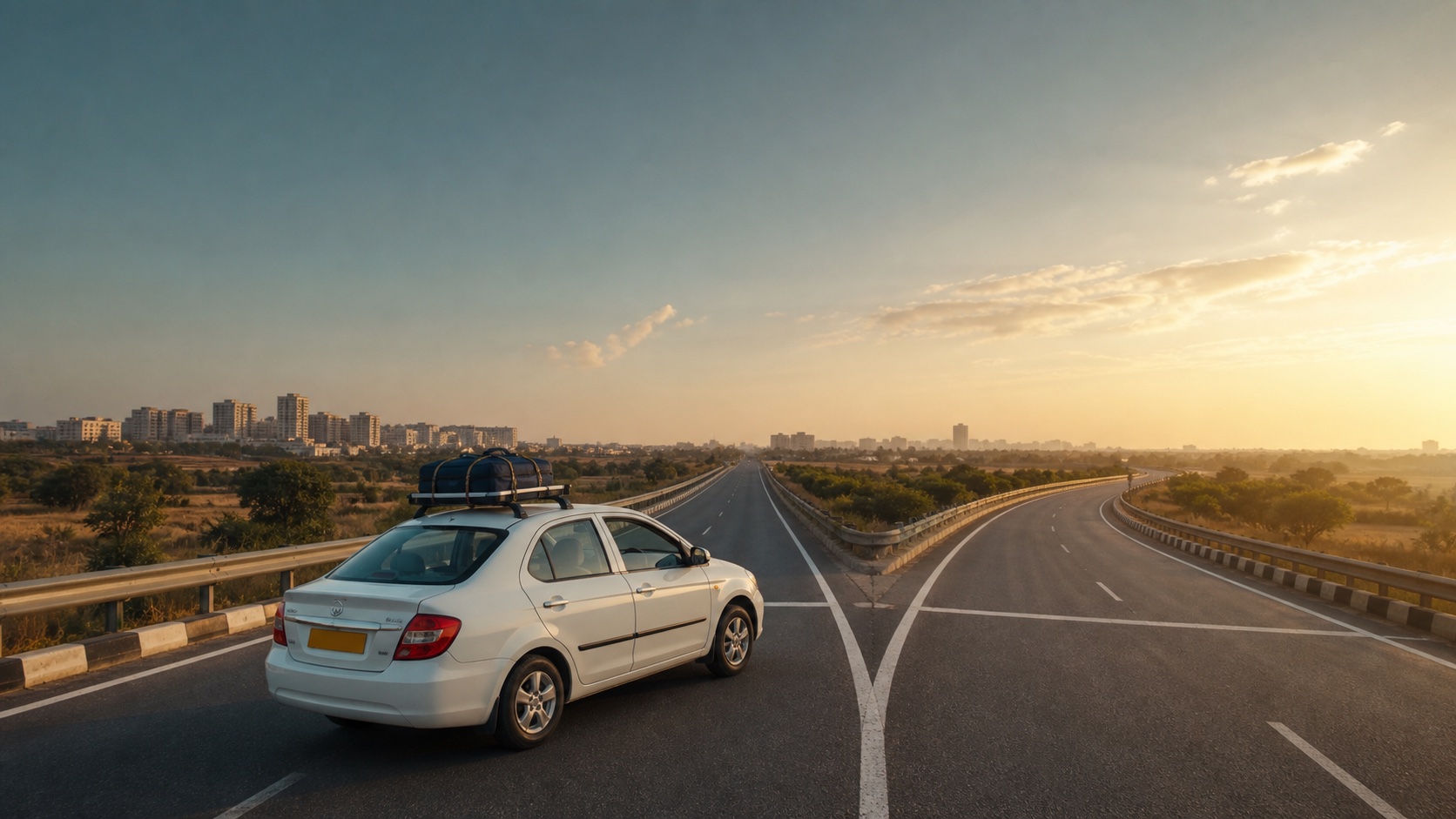

Travelling by cab with heavy luggage requires more planning than an ordinary road journey.
You may have the correct number of passenger seats but still discover that the vehicle does not have enough practical space for all your suitcases bags and other belongings.
This is especially important during airport transfers family holidays weddings long outstation trips group journeys and other travel where passengers may carry several large bags.
The right approach is to consider passengers and luggage together before selecting the vehicle.
This guide explains how to plan a cab journey with heavy luggage in India and what to check before confirming your booking.
Start By Counting Your Passengers
First confirm exactly how many people are travelling.
Passenger count determines which vehicle categories you can consider but it should not be the only factor in your decision.
Two groups with the same number of passengers can have completely different luggage requirements.
Count Your Luggage Separately
After confirming the passengers count the luggage.
Ask how many large suitcases medium bags small bags backpacks and other bulky items the group expects to carry.
This provides a clearer picture of the actual space requirement.
Bag Size Matters More Than Bag Count Alone
Six small backpacks require very different space from six large hard shell suitcases.
Do not tell yourself that the group has only four bags without considering how large those bags actually are.
Think about the approximate size and shape of major luggage items.
Consider Both Passengers And Luggage
A vehicle should not be selected using passenger count alone.
For example four passengers travelling with minimal weekend luggage may have different requirements from four passengers travelling to an airport with several large suitcases.
Always consider the complete combination.
Why Heavy Luggage Changes Vehicle Selection
More luggage requires additional storage space.
If the selected vehicle cannot accommodate the baggage appropriately passengers may lose practical seating or leg space.
For a long outstation journey this can make the trip unnecessarily uncomfortable.
Do Not Assume Empty Seats Are Luggage Space
A passenger seat should not automatically be treated as the solution for excessive baggage.
If luggage requirements are substantial consider whether another suitable vehicle category would provide a more practical arrangement.
Choose according to actual capacity and journey requirements.
Choosing A Sedan With Luggage
A sedan can be suitable for smaller groups with an appropriate amount of luggage depending on the actual vehicle and bag sizes.
If several passengers each have large suitcases review whether the available luggage capacity will be sufficient.
Do not assume every sedan has identical storage space.
Choosing An SUV With Luggage
An SUV can be considered when the group requires additional passenger or luggage space.
However SUV is a broad category and individual vehicles can have different seating and storage arrangements.
Check the actual passenger and luggage information associated with the available booking option.
Choosing A Tempo Traveller With Luggage
Larger groups can consider a suitable Tempo Traveller when passenger and luggage requirements exceed smaller vehicle options.
Tempo Travellers can also be available in different seating configurations.
Choose according to group size luggage route and current availability rather than assuming every Tempo Traveller provides the same space.
Do Not Choose A Larger Vehicle Only By Appearance
A vehicle that looks physically large does not automatically provide the luggage configuration your group requires.
Seating layout and storage arrangements can differ.
Review the applicable vehicle capacity rather than judging only from exterior size.
Heavy Luggage For Airport Transfers
Airport travel is one of the most common situations where luggage becomes an important part of cab selection.
Passengers may have checked baggage cabin bags backpacks and other personal items.
Count the complete luggage before selecting your airport cab.
Do Not Choose An Airport Cab Based Only On Passenger Count
Imagine four passengers travelling to an airport.
If each passenger has a large suitcase plus cabin baggage the group may require considerably more storage than four passengers taking a short road trip.
Choose the vehicle according to both people and bags.
Plan Airport Pickup Luggage Too
The same principle applies when collecting passengers from an airport.
Before choosing the vehicle ask how many travellers are arriving and approximately how much luggage they have.
This is particularly useful for international or longer journeys where passengers may carry more baggage.
Heavy Luggage For Family Holidays
Family holidays can involve several suitcases along with smaller personal bags.
Children may also have additional items that need to travel with the family.
Estimate the total luggage before finalising the cab.
Heavy Luggage For Wedding Travel
Wedding journeys often involve more baggage than ordinary travel.
Passengers may carry clothing footwear gifts accessories and other items in addition to normal luggage.
Consider the complete baggage requirement when selecting the vehicle.
Heavy Luggage For Group Travel
Group luggage can increase very quickly.
Ten travellers carrying one bag each already means ten separate luggage items before smaller bags are counted.
For larger groups plan storage requirements together with passenger seating.
Heavy Luggage For Students
Students moving between cities may carry clothing books electronics and other personal belongings.
This can create significantly more luggage than an ordinary passenger journey.
Choose a cab according to the actual amount of baggage rather than only the number of travellers.
Heavy Luggage For Long Holidays
Longer holidays generally require more clothing and personal items.
Winter trips can require bulky clothing while multi city holidays may involve separate bags for different travellers.
Consider the complete trip when estimating luggage.
Winter Luggage Can Take More Space
Jackets sweaters blankets and other winter items can be bulky even when they are not particularly heavy.
When planning a winter road trip consider luggage volume rather than weight alone.
Shopping Can Increase Return Luggage
Your luggage requirement may change during the trip.
Shopping souvenirs gifts and other purchases can add bags before the return journey.
If you expect substantial shopping leave some flexibility in your original luggage plan.
Do Not Pack The Vehicle To Its Limit Before The Holiday Starts
If every available luggage space is already occupied at departure there may be little room for items added during the journey.
This can be particularly relevant for shopping trips weddings and longer holidays.
Pack According To The Number Of Travel Days
Heavy luggage is sometimes created by packing more than the journey actually requires.
Review the destination weather activities and number of days before packing.
Carry what is realistically useful for the trip.
Avoid Duplicate Items Within A Group
Families and friends may be able to coordinate some commonly used items instead of everyone carrying unnecessary duplicates.
This does not mean leaving important personal items behind.
The goal is simply to pack thoughtfully.
Use Practical Luggage Sizes
Several unusually shaped bags can be more difficult to arrange than standard luggage.
When possible use bags that fit your travel requirements without being unnecessarily bulky.
Keep fragile or valuable items appropriately protected.
Separate Essential Items From Main Luggage
Do not place everything you may need during the journey inside a large suitcase.
Keep a smaller travel bag accessible.
- Drinking water
- Light snacks
- Phone chargers
- Power bank
- Tissues
- Necessary medicines
- Important documents
- Hotel information
- Frequently needed personal items
Keep Medicines Accessible
Necessary medicines should not be buried beneath several large suitcases.
Keep them in an accessible personal bag according to appropriate storage requirements.
This is especially important when travelling with senior citizens or children.
Keep Important Documents With You
Do not place essential travel documents deep inside luggage that is difficult to access during the journey.
Keep important documents and booking information organised and accessible.
Protect Valuable Items
Keep important personal valuables appropriately secured and under your control.
Do not casually place small valuable items among large bags where they may be difficult to locate later.
Label Similar Looking Bags
When several travellers have similar suitcases simple identification can help prevent confusion.
This can be particularly useful during group travel hotel transfers and airport journeys.
Check Your Luggage Before Departure
Count major luggage items before loading them into the cab.
For a group journey one person can keep a simple count.
Repeat the check after important hotel or destination departures when appropriate.
Do Not Forget Small Bags
Small backpacks handbags shopping bags and laptop bags can be easier to overlook than large suitcases.
Include them in your luggage planning even if they do not require the same storage space.
Consider Loading And Unloading Time
Heavy luggage can make pickup and hotel transfers take longer.
Allow reasonable time for loading bags at the start of the journey and unloading them at the destination.
This is particularly important when the group has a fixed airport or railway schedule.
Be Ready Before The Cab Arrives
Keep your luggage packed before the planned pickup.
Avoid finishing major packing after the cab has already arrived.
This can help the journey begin according to the planned schedule.
Multiple Pickup Points With Heavy Luggage
When passengers are collected from several locations the amount of luggage inside the vehicle increases after every pickup.
Plan according to the final total rather than how much space is available after the first passenger joins.
Count Luggage From Every Pickup Point
Ask every passenger about their bags before departure.
Do not discover at the final pickup that another family member has several large suitcases that were not considered when choosing the vehicle.
Consider A Common Pickup Point
If practical a common pickup point can simplify loading for a group.
However families with children senior citizens or substantial luggage may find individual pickups more convenient.
Balance route efficiency with passenger requirements.
Heavy Luggage On A Multi Day Trip
During a multi day journey luggage may be loaded and unloaded several times.
Pack in a way that makes daily hotel transfers manageable.
You may not need to open every large suitcase at every overnight stop.
Consider A Smaller Overnight Bag
On some multi day trips travellers may find it useful to keep frequently needed overnight items in a smaller bag.
This can reduce the need to reorganise every large suitcase during short hotel stays.
Heavy Luggage On A Multi City Trip
Multi city journeys can involve repeated hotel check ins and frequent movement.
A practical luggage arrangement becomes particularly useful because bags may need to be handled every day.
Avoid carrying unnecessary items that make each transfer more difficult.
Heavy Luggage On Hill Station Trips
Hill journeys can involve winter clothing and other bulky items.
Review passenger luggage and route requirements together when choosing the vehicle.
Also check current road and weather information where relevant.
Heavy Luggage During Monsoon
During monsoon keep important items appropriately protected from moisture.
Check the weather forecast and pack according to expected conditions.
Avoid carrying unnecessary bulky items simply because the journey is by cab.
Heavy Luggage With Children
Travelling with children can add bags containing clothing food and other necessary items.
Keep frequently needed child related items accessible during the road journey.
Do not place everything inside luggage that cannot be reached easily.
Heavy Luggage With Senior Citizens
When senior citizens are travelling try to keep their necessary medicines and personal essentials easily accessible.
Consider passenger space while arranging luggage so the journey remains practical for everyone.
Do Not Block Practical Passenger Space
Luggage should not make normal passenger seating unnecessarily difficult.
If the baggage requirement is too large for the selected vehicle review another suitable option.
Do Not Overload The Vehicle
Select a vehicle that appropriately accommodates the group and luggage within its applicable capacity.
If the combined requirement is too large review a larger suitable vehicle or another practical arrangement.
Do not rely on overcrowding as a solution.
Review Vehicle Capacity Before Booking
Vehicle categories can include different models and configurations.
Do not assume that every sedan SUV or Tempo Traveller provides identical luggage capacity.
Review the information associated with the actual option available for your booking.
Tell The Group To Finalise Luggage Early
If possible ask passengers to estimate their luggage before the cab is booked.
This is especially useful for airport transfers weddings and group holidays where baggage requirements can be substantial.
What If Your Luggage Increases After Booking
If the amount of luggage changes significantly after booking review whether the original vehicle is still suitable.
A substantial increase in baggage may require another vehicle category depending on availability and requirements.
Review applicable modification and fare conditions before making changes.
What If Another Passenger Joins
An additional passenger plus their luggage can change the vehicle requirement.
Check both passenger capacity and storage rather than assuming the original vehicle will still be suitable.
Review The Fare If You Change Vehicle Category
A different vehicle category may have a different fare.
Review the current price and booking conditions for the revised option before confirming any change.
Review Your Outstation Cab Fare
Cab fares can vary according to route travel date vehicle category journey type and booking conditions.
Depending on the booking there may be conditions related to distance tolls taxes parking waiting time driver related charges or additional kilometres.
Review the latest fare information for your actual journey.
Do Not Choose A Vehicle Only To Save A Small Amount
Compare the complete journey requirement before selecting the lowest priced option.
If another suitable category provides the passenger and luggage capacity your group actually requires include that in your decision.
Airport Heavy Luggage Example
Imagine four family members travelling to an airport with four large suitcases and several cabin bags.
They should not choose the cab based only on the fact that there are four passengers.
The family should review available vehicle options that can appropriately accommodate both travellers and baggage.
Wedding Heavy Luggage Example
Imagine six relatives travelling to a wedding in another city.
Along with personal suitcases they are carrying wedding clothes gifts and several additional bags.
The group should calculate the total luggage before choosing the vehicle rather than assuming any vehicle with six passenger seats will be sufficient.
Group Holiday Luggage Example
Imagine a larger group planning a week long holiday.
If every traveller carries a large suitcase the luggage requirement can become substantial.
The group should compare suitable larger vehicle options according to actual passenger and baggage capacity.
Heavy Luggage Cab Journey Checklist
- Confirm final passenger count
- Count large suitcases
- Count medium bags
- Count smaller personal bags
- Consider unusual or bulky luggage
- Estimate return journey shopping
- Check passenger capacity
- Check luggage capacity
- Choose a suitable vehicle category
- Avoid using passenger space for excessive baggage
- Pack according to journey duration
- Keep essential items accessible
- Keep necessary medicines accessible
- Keep important documents with you
- Label similar luggage where useful
- Plan loading time
- Keep luggage ready before pickup
- Count luggage from every pickup point
- Review the vehicle if luggage increases
- Review current fare details
- Check applicable modification conditions
- Recheck major bags before departure
Plan Your Cab Journey With Luggage Using GetMeCab
GetMeCab provides outstation cab booking options for different types of intercity journeys including airport transfers family holidays wedding travel group journeys one way trips round trips and multi city road trips.
Travellers can review suitable vehicle categories according to passenger count luggage destination journey duration and travel requirements.
Vehicle capacity availability fares and booking conditions can vary according to route travel date vehicle category and journey requirements. Review the current vehicle and booking information for your specific GetMeCab journey before confirming.
Conclusion
Planning a cab journey with heavy luggage starts with one simple rule. Count passengers and bags separately.
Do not assume that a vehicle is suitable simply because it has enough passenger seats. Large suitcases airport baggage wedding items winter clothing and group luggage can substantially change the amount of space required.
Choose the vehicle according to the complete combination of passengers luggage journey duration and destination. Keep essential items accessible and review the vehicle requirement again if your baggage increases after booking.
Planning luggage before the cab arrives can help you avoid discovering at pickup time that the group has more bags than the selected vehicle can practically accommodate.