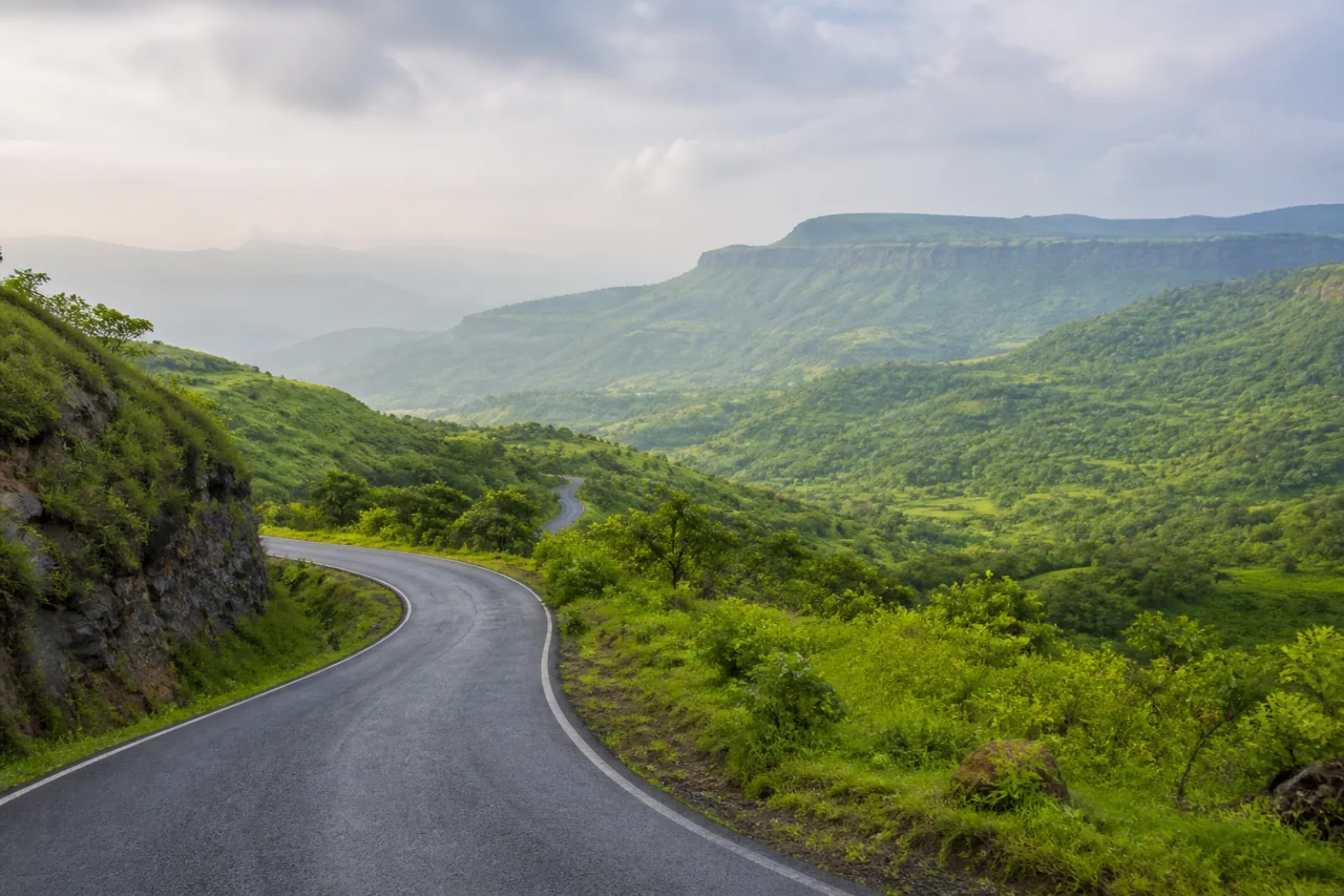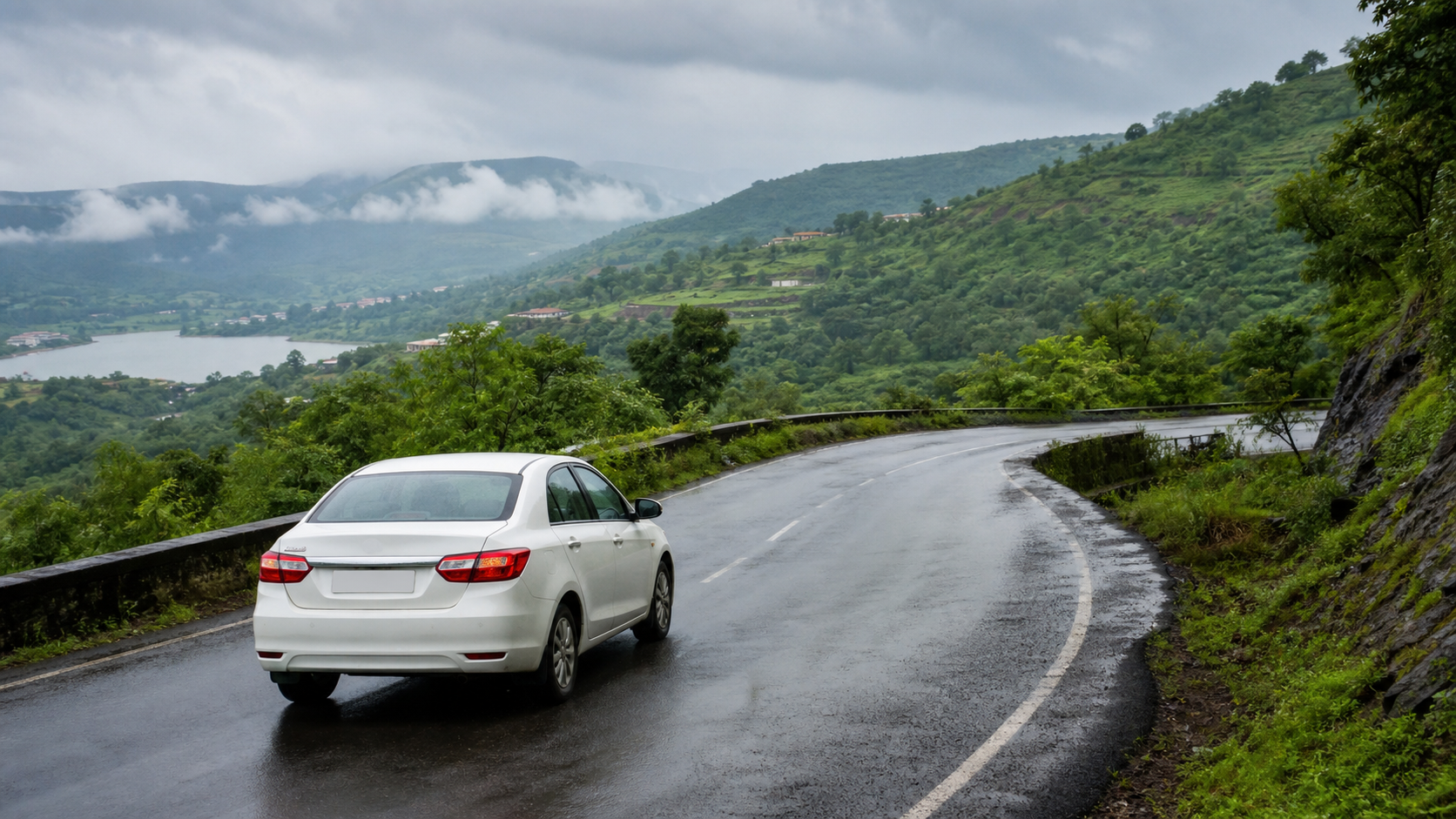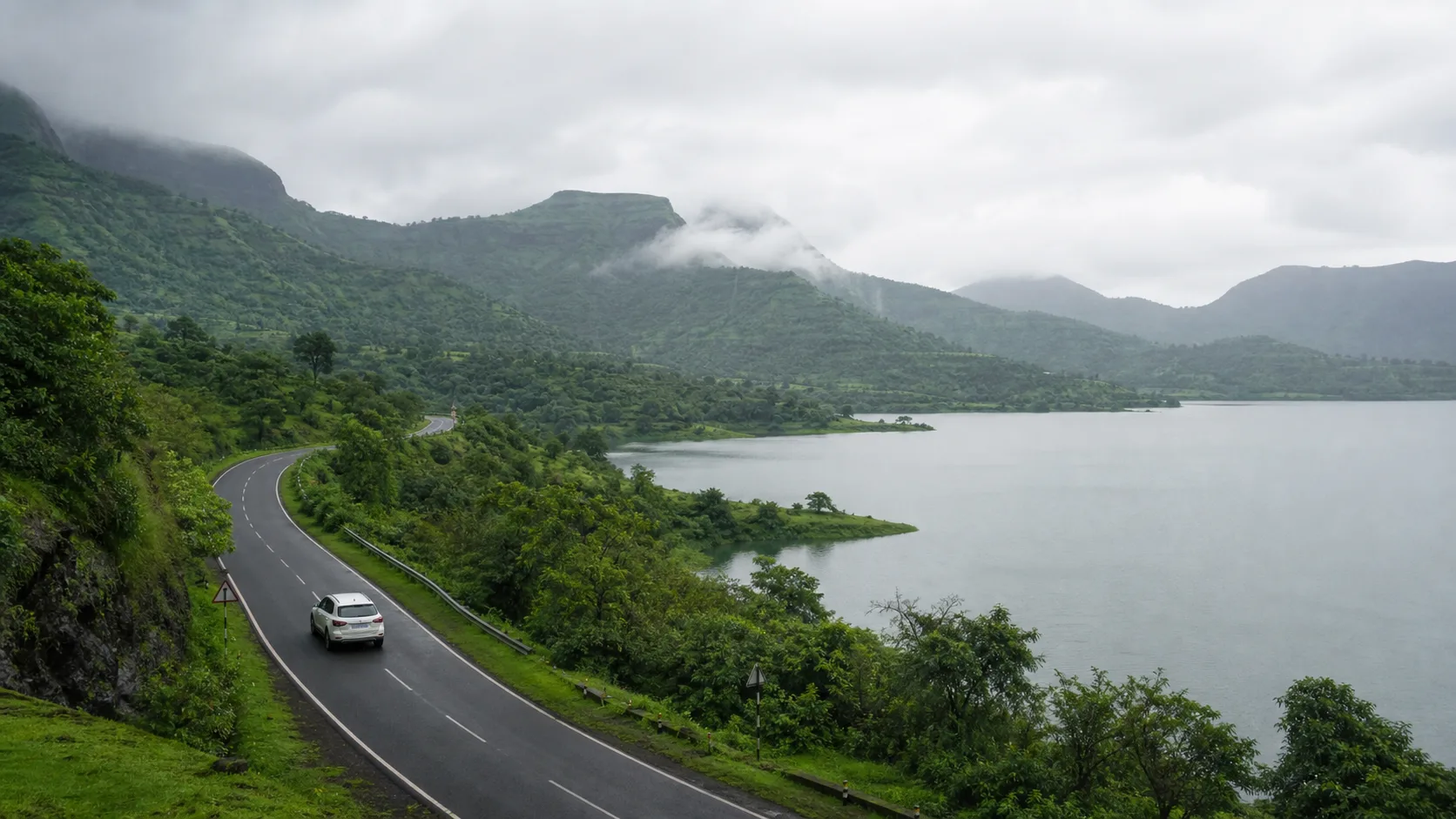
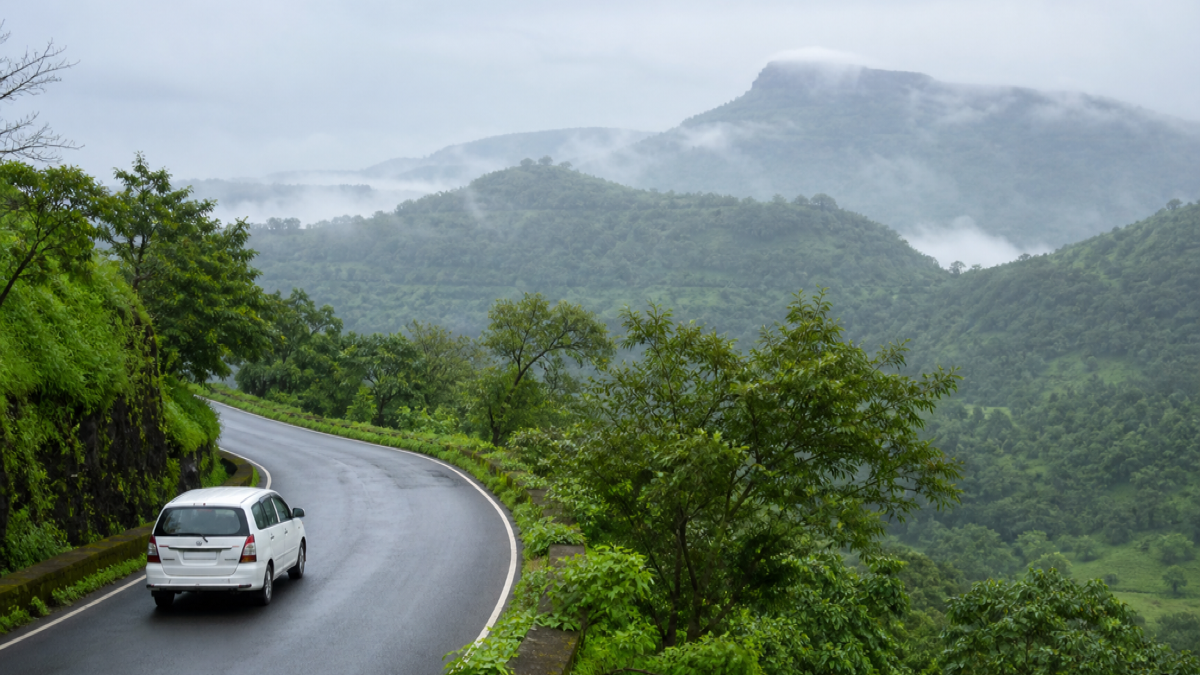
Bhimashankar brings together a Jyotirlinga pilgrimage, a forested Sahyadri setting and a road journey that needs more margin than its distance alone suggests. Maharashtra Tourism places Bhimashankar about 125 km from Pune, while your actual distance depends on the pickup address, route and final vehicle drop near the temple.
The official Maharashtra Tourism route guidance identifies the Pune–Manchar–Bhimashankar approach for private vehicles. The later section includes bends, changing visibility and forest surroundings, so this is not a journey to plan around the fastest map estimate.
Returning to Pune? Check the Pune to Bhimashankar round-trip cab options. If the cab’s work ends at Bhimashankar, use the Pune to Bhimashankar one-way page. You can also build a personalised Bhimashankar roadbook before checking the live fare.
Pune to Bhimashankar at a glance
| Planning question | Practical answer |
|---|---|
| Road distance | Maharashtra Tourism states approximately 125 km from Pune |
| Common road approach | Pune toward Manchar, then onward to Bhimashankar |
| Time planning | Keep a generous driving window plus separate time for breaks, parking, walking and darshan |
| Best departure | An early, well-rested start generally preserves daylight and schedule flexibility |
| Return to Pune | Pune to Bhimashankar round trip |
| Destination drop | Pune to Bhimashankar one-way cab |
Distance and duration are planning inputs, not guarantees. Pune traffic, rain, fog, temple crowds, road restrictions and the exact pickup and drop can all change the day.
Which route is normally used?
A common drive heads north from Pune toward the Manchar side before continuing into the hills toward Bhimashankar. The correct city exit depends on where the trip begins. A pickup from Kharadi or Pune Airport does not have the same first stage as a pickup from Baner, Wakad, Kothrud or central Pune.
Enter the complete pickup address and let the live route respond to current conditions. Road work, local traffic, rain or an official restriction may make the driver adjust the approach. A requested detour should be agreed before booking because a temple transfer and a multi-stop sightseeing day are different services.
When should you leave Pune?
An early departure is useful when the group is rested. It can reduce some city traffic, preserve daylight for the hill section and leave more room for darshan queues. It should not mean beginning after too little sleep or pressuring the driver to maintain an unsafe pace.
Plan backward from the return. Allow time for the city exit, a proper break, parking, the walk to and from the temple, queues, food and slower weather-affected driving. Weekends, Shravan, Mahashivratri and other important periods can be much busier; check current temple and local authority guidance rather than relying on an old timetable.
How should you plan the temple visit?
The Pune district administration describes Bhimashankar as one of Maharashtra’s five Jyotirlingas, and Maharashtra Tourism describes it among the twelve Jyotirlinga sites. It is an active place of worship, not simply a sightseeing stop.
- Check current opening, darshan and access information shortly before travel.
- Keep identification and any official booking confirmation accessible.
- Wear suitable footwear for wet surfaces and the walk around the complex.
- Ask the official temple authority about current arrangements for older visitors or travellers with limited mobility.
- Agree on a clear pickup point with the driver because vehicle access and crowd controls can change.
- Do not leave valuables unattended or hand them to unverified intermediaries.
Do not publish a fixed return minute based on an assumed queue. The better plan is a time window and a communication arrangement with the driver.
Where should you stop?
A proper stop before the more winding final section is usually more comfortable than an improvised halt near a bend. Depending on departure time and current facilities, the Manchar side can be practical for fuel, breakfast or washrooms.
- Choose a busy, well-lit establishment with safe parking.
- Complete fuel and washroom stops before the more remote section.
- Carry water, medicines and a light snack inside the cabin.
- Check recent opening information instead of depending on an old restaurant list.
- Never stop where the vehicle blocks traffic or sits partly on a blind curve.
Can you combine darshan with nearby places?
Maharashtra Tourism identifies the forest landscape and places such as Gupt Bhimashankar, Konkan Kada and Nagphani in the wider visitor experience. These are not automatic additions to a direct cab booking. Walking conditions, forest rules, weather, visibility and physical effort must be checked for the day of travel.
Choose one priority rather than attempting every nearby place. If the group wants a forest walk or viewpoint, name it before booking and verify current access with the responsible authority. A driver cannot substitute for a guide, forest permit or local safety instruction.
Bhimashankar Wildlife Sanctuary etiquette
The Maharashtra EcoTourism portal lists Bhimashankar Wildlife Sanctuary, and government tourism information notes the area’s biodiversity, including the Indian giant squirrel, Maharashtra’s state animal. A road journey through a protected landscape carries responsibilities.
- Follow forest-department signs, closures and checkpoint instructions.
- Do not feed, chase or approach wildlife.
- Do not ask the driver to stop for an animal photograph.
- Keep music low and carry every piece of litter out.
- Stay on permitted roads and visitor paths.
- Do not treat a cab booking as permission for trekking or forest entry.
Monsoon driving and safety
Rain makes the Sahyadri landscape exceptionally green, but it can also reduce visibility, soften shoulders and make steps and roads slippery. Clear weather in Pune does not guarantee clear conditions near Bhimashankar.
- Check live weather and road advisories shortly before departure.
- Allow the driver to reduce speed in rain, fog and poor visibility.
- Use seat belts in every seating row where provided.
- Never stop on a bend, narrow shoulder or in flowing water for photographs.
- Carry rain protection, dry bags for essentials and downloaded booking details.
- Keep extra time for the return instead of trying to recover delays through speed.
- Respect every closure; a confirmed cab does not make a closed road or trail safe.
Same-day return or overnight stay?
A same-day round trip may suit you when
- the group can leave Pune early and comfortably
- the main purpose is darshan rather than a long sightseeing list
- current weather and road conditions are favourable
- the return can begin with a sensible daylight and rest margin
Use the Pune to Bhimashankar round-trip page and give the actual pickup date, passenger count and itinerary.
An overnight plan may be calmer when
- you are travelling with children, older relatives or anyone needing more breaks
- darshan is expected to be crowded
- you want verified nearby nature stops
- heavy rain or a late Pune departure would compress the day
Confirm accommodation independently and share its exact location. A stay described as near Bhimashankar may still require additional road time.
One way or round trip?
Choose one way when Bhimashankar is the final road destination, the return is arranged separately or the group will stay without needing the cab. Choose round trip when you will return to Pune by road and need the temple visit, waiting and return coordinated.
Do not choose solely from the smallest headline amount. Compare included kilometres or duration, waiting, driver allowance, parking, toll or access charges, night conditions and extra-hour or extra-kilometre rates.
Which vehicle should you choose?
- Sedan: often suitable for one to three travellers with modest luggage.
- SUV or MPV: more practical for a family, additional bags or passengers who value extra cabin room.
- Tempo Traveller: useful for a larger group, subject to actual seating, luggage capacity and road suitability.
An advertised seat count is not a luggage measurement. Tell GetMeCab about suitcases, walking aids, children’s equipment and passenger needs before accepting the vehicle category.
Build your own Bhimashankar roadbook
The GetMeCab trip planner lets you choose a same-day return, overnight return or destination drop; enter passengers and bags; and compare a temple-first, nearby-stops or direct-transfer plan. It then passes the exact journey into live fare search.
The planner is guidance, not a promise of temple timing, traffic, weather or wildlife access. Verify live conditions and review the complete fare before payment.
Before-you-leave checklist
- Confirm the full Pune pickup and Bhimashankar drop or meeting point.
- Check current temple, weather, road and forest guidance.
- Choose same-day, overnight or one-way based on the real return plan.
- List every stop before accepting the fare.
- Share passenger, luggage and mobility requirements.
- Review fare inclusions, waiting terms and cancellation conditions.
- Download booking information in case mobile coverage weakens.
- Keep enough return margin for rain and darshan queues.
Frequently asked questions
How far is Bhimashankar from Pune by road?
Maharashtra Tourism states approximately 125 km from Pune. The actual journey depends on your pickup address, live route and final drop.
How long does a Pune to Bhimashankar cab take?
Do not rely on one fixed duration. Allow a generous driving window and additional time for Pune traffic, breaks, weather, the hill road, parking and the walk to the temple.
Can Pune to Bhimashankar be done in one day?
Yes, many travellers plan a same-day return, but it works best with an early, rested start, a focused temple visit and favourable conditions. Crowds, rain or extra stops can make an overnight plan more comfortable.
Is the road suitable during the monsoon?
Conditions vary. Rain and mist can reduce visibility and grip, especially on bends. Check current advisories, respect restrictions and keep the schedule flexible.
Does a one-way cab include darshan waiting?
Not automatically. A one-way booking normally covers the confirmed destination transfer. If you need the cab to wait and return to Pune, choose and price a round-trip itinerary.
Can I include Gupt Bhimashankar or a viewpoint?
Only after checking current forest access, weather and walking conditions. Name every requested stop before booking because it may change the route, waiting and fare.